
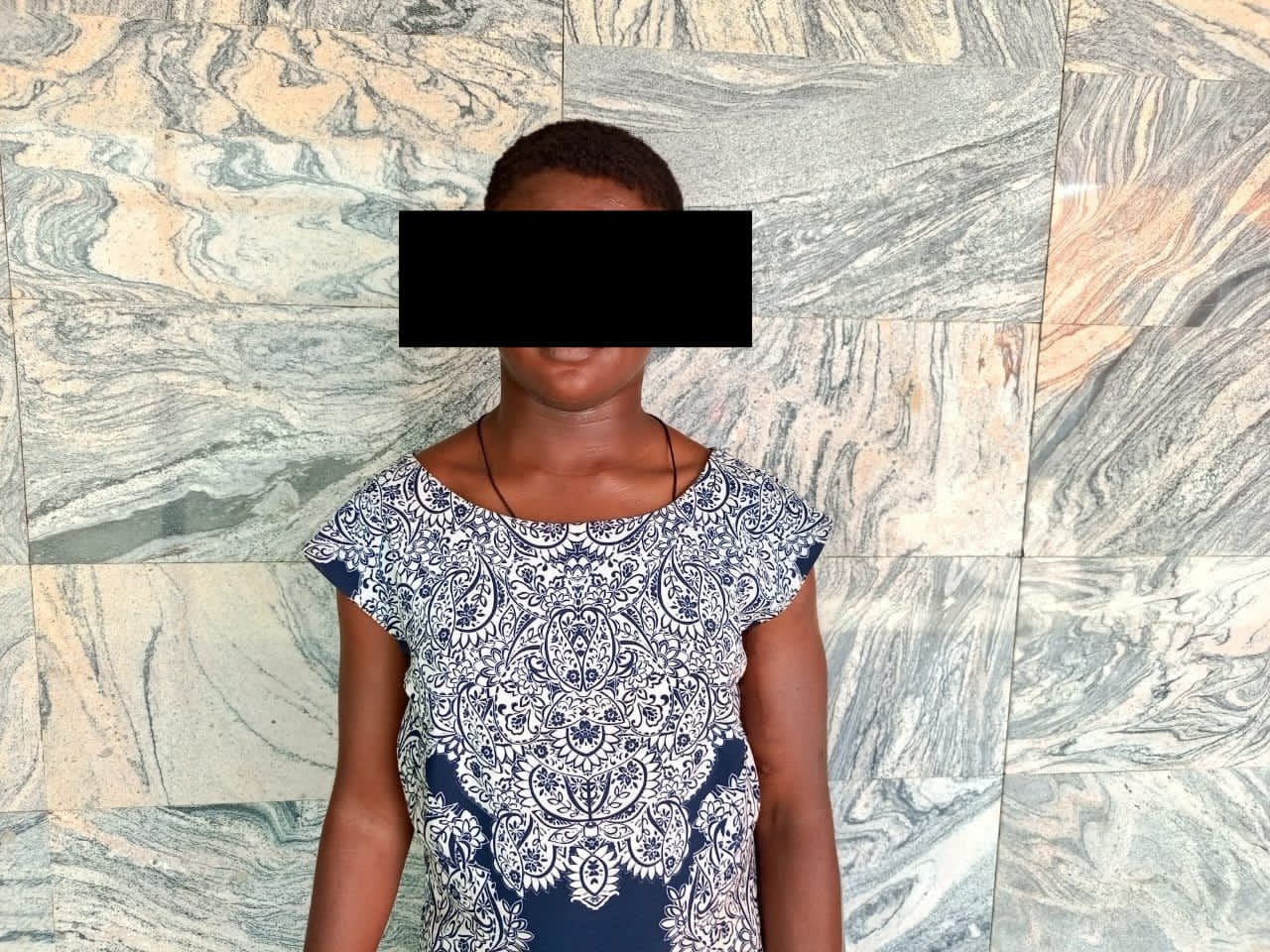
..as GAHTO seeks the Imo State government’s support to empower human trafficking victims.
By Naomi Onome
A 22-year-old physically challenged victim from Imo State, identified as Njoku Princess Nnena, has recounted her harrowing journey through a suspected human trafficking network stretching from Nigeria to Mali, exposing how vulnerable young women are recruited and exploited across West Africa.

Her story comes amid growing concern raised by the Global Anti-Human Trafficking Organization (GAHTO) over the increasing number of young girls from Imo State being lured into trafficking schemes.
Journey into Exploitation
Nnena disclosed that she left her home in Imo State earlier in the week in search of better economic opportunities to support herself, her three-year-old son, and her struggling mother.
Her journey began with a trip to Onitsha before proceeding to Lagos, where she was introduced by a young man to a woman operating around an “underbridge” area—allegedly a known hub for recruiting young girls for overseas connections.
According to her, the woman served as a middle link in a trafficking chain, receiving girls from intermediaries and connecting them to syndicates based in Mali.
After initial discussions, arrangements were made for her travel. She spent a night in a hotel before continuing the journey the next day, moving through Cotonou in the Republic of Benin, where she was handed over to another contact believed to be part of the trafficking network.
Life in Mali
Upon arrival in Mali, Nnena said she was taken to a location where several Nigerian girls were already living under the control of a “madam”.
She alleged that the girls were forced into prostitution and required to remit their earnings, though she was never informed of the total amount she would be expected to repay.
Despite being aware of the nature of the work, Nnena said financial hardship and desperation pushed her into making the decision.
Health Crisis and Return
Her stay in Mali was short-lived after her health deteriorated significantly. Nnena, who has battled epilepsy linked to childhood stroke, revealed that she ran out of medication during the journey.
The condition worsened upon arrival, leaving her unable to continue with the expected activities. She was subsequently deemed unfit and sent back to Nigeria, with assistance from GAHTO.
She was rescued by GAHTO and returned to Nigeria on Easter Friday.
A Life Marked by Struggle
Further insight into her condition was provided by her mother, Mrs Ipe Ikenna Lora, who described years of medical and emotional hardship.
According to her, Nnena’s health challenges began at the age of two, starting with convulsions, progressing into coma, and later developing into epilepsy, accompanied by memory loss linked to early childhood stroke.
She revealed that her husband abandoned the family, blaming her for complications during pregnancy. Since then, she has singlehandedly borne the burden of caring for her daughter while struggling to sustain a small business.
The stress, she said, has taken a toll on her health, resulting in high blood pressure. She also recounted the frequent fear of Nnena wandering off due to memory-related challenges.
Mrs Lora noted that she was unaware of her daughter’s journey to Mali until she was contacted by GAHTO following her rescue.
Call for Help and Fresh Start
Now back in Nigeria, Nnena is seeking a second chance at life. Currently an SS2 student, she expressed a strong desire to either continue her education or acquire vocational skills that would enable her to become self-reliant.
She emphasised the need for financial assistance to access medical care and stabilise her condition.
Her mother has also appealed to the government, humanitarian organisations, and well-meaning Nigerians for urgent support to help her daughter rebuild her life.
Rising Trafficking Concerns
GAHTO has raised alarm over what it describes as a deeply troubling rise in the trafficking of young girls from Imo State and other parts of Nigeria.
The organisation called for urgent and coordinated intervention from relevant authorities, including Barr. Chioma D. Uzodinma, the wife of the Imo State governor, and Lady Nkechinyere Ugwu (UNJP), the Honourable Commissioner for Women Affairs and Social Welfare, stressing the need for the following:
Increased public awareness
Stronger preventive measures
Rehabilitation and reintegration support for survivors
A Broader Warning
Nnena’s story underscores the persistent and evolving nature of human trafficking networks across West Africa, where vulnerable individuals—particularly young women facing health and economic challenges—are targeted with promises of financial independence.
Her experience serves as a stark reminder that beyond rescue efforts, there is an urgent need to address the underlying socio-economic and health vulnerabilities that traffickers exploit.
It also highlights the importance of sustained collaboration between government agencies, NGOs, and communities to not only dismantle trafficking networks but also provide survivors with a pathway to dignity, stability, and hope.


Leave a Reply