Ohaneze Oto-Awori Crisis: Duruchima Dismisses Election Cancellation Claim, Insists Tenure of Former Chairman Has Expired
By Naomi Onome
The Chairman of Ohaneze Ndigbo, Oto-Awori Local Council Development Area (LCDA), Lagos State, High Chief Chimezie Duruchima, popularly known as Duru Ofiafuluagu I of Osumenyi, has dismissed reports that the election which produced him as chairman was cancelled, insisting that no official communication known to him has invalidated the exercise.
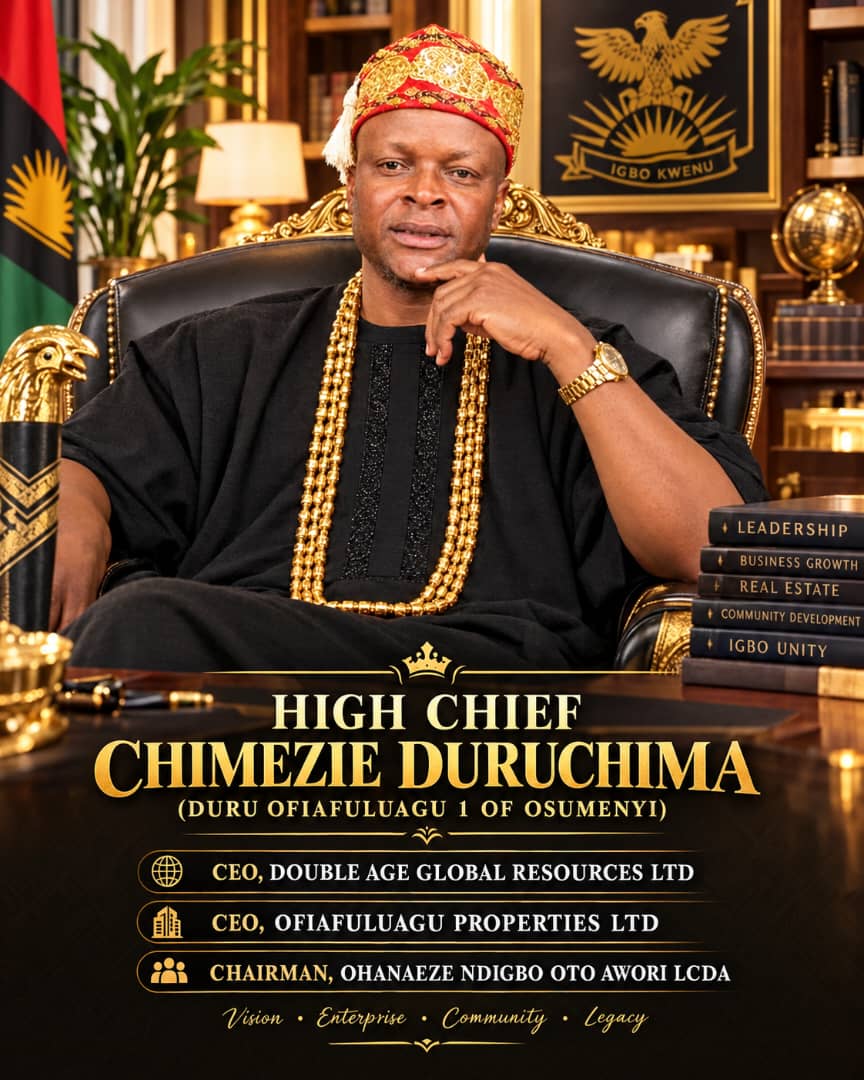
Duruchima described the purported cancellation as unfounded, maintaining that he emerged through a duly conducted election and that the leadership transition in the local government should be respected in accordance with the constitution of Ohaneze Ndigbo.
Speaking during an interview, the chairman questioned the basis upon which Chief Emma Ubah, also known as Otunba of Ojoto, was reportedly claiming that the election had been cancelled, alleging that Ubah had not attended any of the general meetings of Ohaneze Ndigbo in the local government since losing the election for the state presidency.
According to Duruchima, Ubah’s alleged absence from the organisation’s meetings raises questions about the source of his information and the authority upon which he was making statements concerning the status of the local government election.
“How can you sit in your house and conclude that the president has cancelled the election? Which election did he cancel? Nobody cancelled any election,” Duruchima said.
He further alleged that Ubah was not present at the general meetings held in Ojo, including meetings where issues concerning the organisation were discussed.
The chairman’s comments followed questions about a purported letter from the General Secretary of Ohaneze Ndigbo, which reportedly directed the immediate suspension of further local government elections across the state pending the harmonisation of outstanding issues and the restoration of peace within the organisation.
The letter, said to have been issued under the directive of the State Executive Council, reportedly cited petitions, the prevailing state of the organisation and the need for inclusive leadership as reasons for the suspension. It also stated that local governments where there were issues and official petitions following elections would be revisited.
However, Duruchima said he was hearing about the directive for the first time during the interview, adding that nobody from the state leadership had officially communicated the development to him.
He also questioned the authenticity and authority of the document, particularly whether it had been properly authorised by the relevant leadership structures of the organisation.
“I am just hearing this information. I haven’t heard it from the state leadership. Nobody sent it to me, and nobody contacted me yet,” he said.
Duruchima further disclosed that he had been in contact with members of the electoral committee, including its chairman and secretary, who, according to him, had indicated that the election process would proceed.
He maintained that the state electoral committee, rather than individuals acting independently, should be responsible for decisions concerning the conduct or suspension of elections.
On the constitutional basis of the leadership dispute, Duruchima maintained that the constitution of Ohaneze Ndigbo provides for a single tenure at the relevant leadership level, with the position rotating among the recognised zones.
He explained that while leadership positions at the state level are rotated among states, local government leadership follows a zonal arrangement based on the recognised zones within the local government.
According to him, the rotational arrangement is intended to give different zones the opportunity to produce leaders rather than allow an individual or group to monopolise the position.
He argued that a former chairman who had completed his tenure could not return to occupy the same position simply because he was unwilling to relinquish power.
Duruchima also alleged that the former chairman had exhausted his four-year tenure and that his decision to contest for the state presidency had further changed the leadership arrangement at the local government level.
He explained that the former chairman had previously occupied the local government position while he served as vice-chairman. According to him, when the former chairman left the local government position to contest for the state presidency, the vice-chairman assumed leadership responsibilities, paving the way for the subsequent leadership transition.
Duruchima said he personally led the local government delegation that participated in the state election in Malaysia, where the former chairman contested for the presidency but lost.
He maintained that having participated in the process and subsequently emerged as chairman at the local government level, he should be allowed to discharge his responsibilities without unnecessary interference.
The chairman further argued that the former chairman could not abandon a position to contest for a higher office and subsequently return to reclaim the earlier position after losing the election.
He insisted that such a development would contradict the principles of constitutional leadership and orderly succession.
Asked about the underlying cause of the disagreement, Duruchima attributed the crisis to what he described as selfish interests and an unwillingness by some individuals to relinquish power after completing their tenure.
He alleged that the dispute was being fuelled by a desire to retain control of the organisation rather than respect the established leadership rotation.
“The reason is selfish. When somebody has tasted power and wants to continue, it happens like this. We call it greediness,” he said.
He further alleged that some individuals were uncomfortable with the possibility of another person assuming leadership and were prepared to create divisions rather than allow the organisation’s rotational arrangement to take effect.
Duruchima, however, said he was determined to ensure that Oto-Awori LCDA was not drawn into a prolonged leadership crisis, stressing that the interest of the organisation should take precedence over individual ambitions.

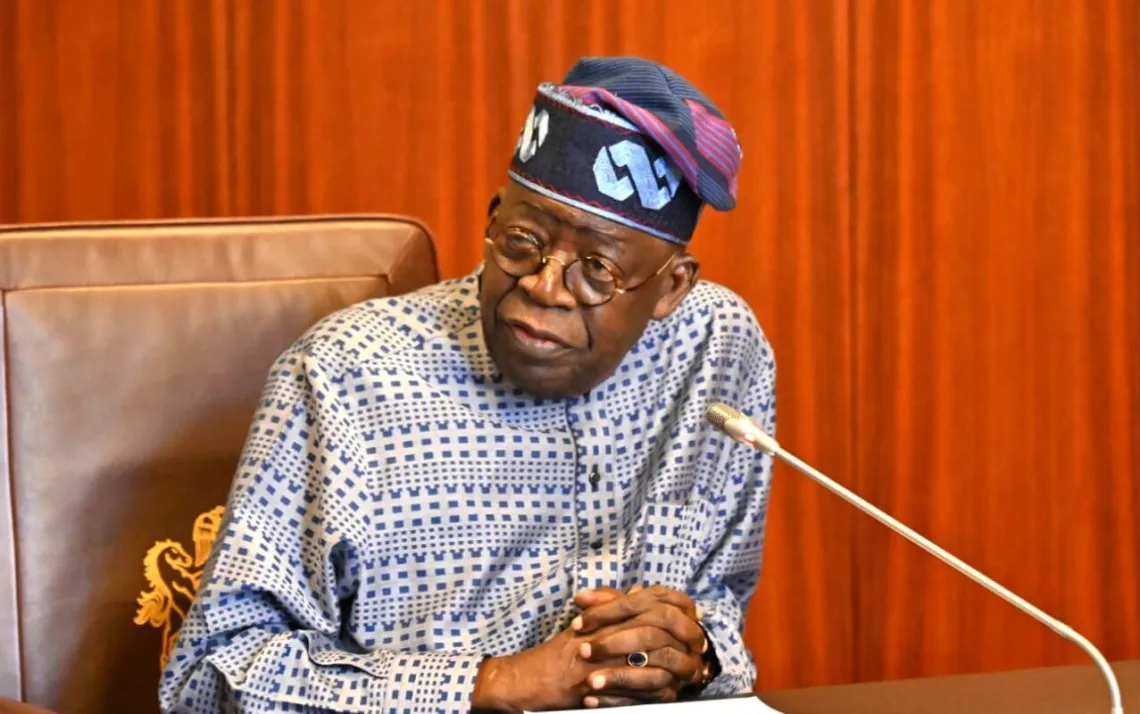
Providing further details about the election that produced him, Duruchima said the exercise had the support and participation of traditional rulers and other recognised stakeholders in the local government.
He identified three traditional rulers and representatives of the Igbo community who, according to him, witnessed or supported the electoral process.
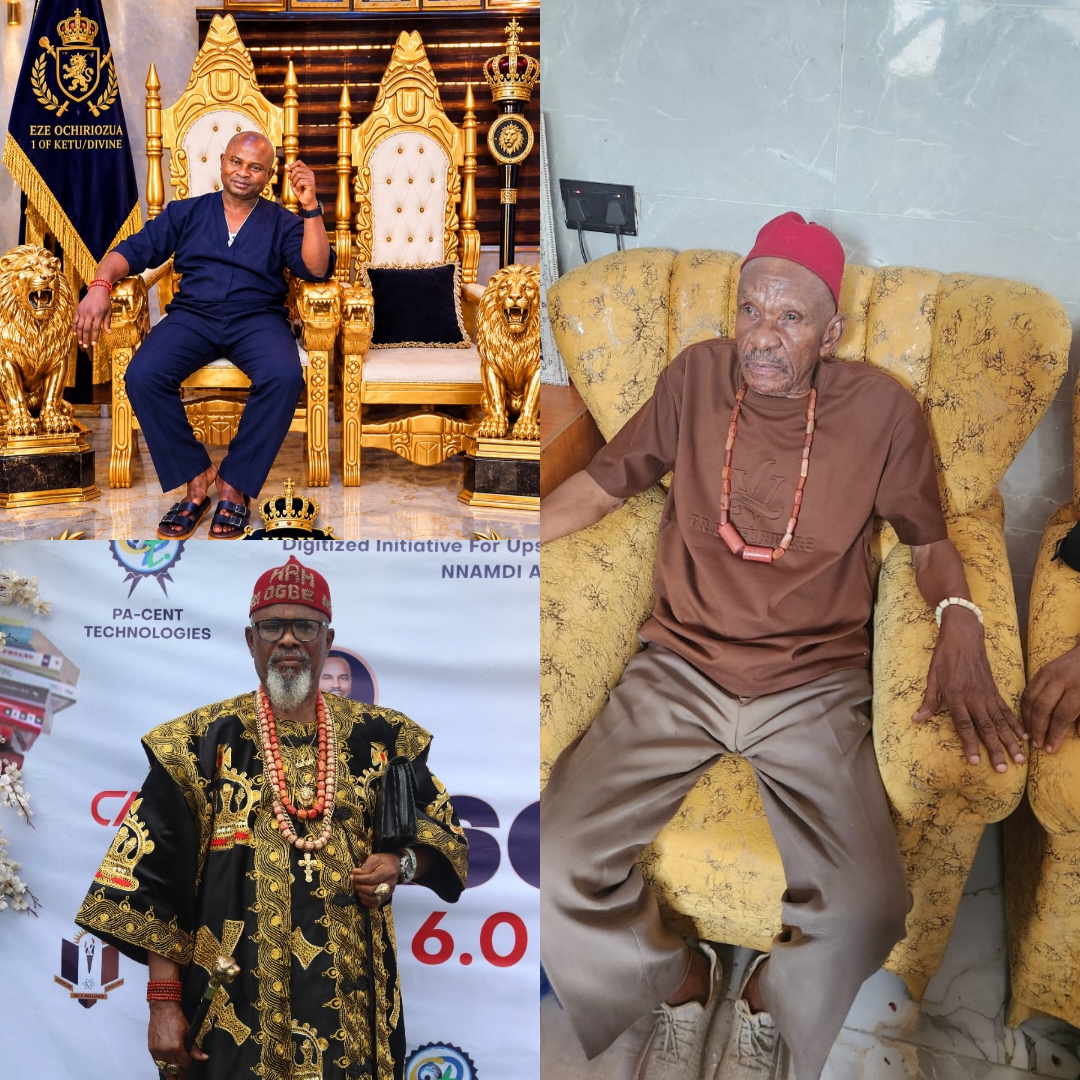
They include HRH Eze Uchenna Dike, Eze Ochiriozua I of Ketu Divine; Eze Ambassador Elder Timothy Eberechukwu Nwanoro, Eze Diaba Ogbe Agu II, Eze Ndi Igbo Na Oto-Awori; and Chief Udokus, Obi Ndigbo in Afromedia.
Duruchima said the support of the traditional rulers was significant because of their positions as custodians and respected leaders within the Igbo community.
He maintained that their involvement demonstrated that the election was not an isolated exercise but one conducted with the knowledge and support of important stakeholders.
According to him, the traditional rulers believed in his capacity to lead the organisation and had given their blessings to his emergence.
He also questioned the authority of any individual traditional ruler to unilaterally invalidate an election, arguing that decisions affecting the organisation should be taken collectively and in accordance with its constitution.
Despite the disagreement, Duruchima said he was working behind the scenes to restore unity among members of Ohaneze Ndigbo in Oto-Awori LCDA.
He disclosed that he had commenced consultations and engagements aimed at bringing the opposing sides together, stressing that reconciliation remained necessary for the stability and progress of the organisation.
“I am working towards that. I am making my underground investigations and also doing my consultations with a view to bringing our parties together,” he said.
He acknowledged that the disagreement had the potential to create divisions within the Igbo community but expressed optimism that dialogue and adherence to the constitution would provide a lasting solution.
When asked about reports of a dispute involving the state and national leadership and proceedings in Lagos, Duruchima declined to comment extensively, explaining that his position as a local government chairman did not authorise him to speak on behalf of the state or national leadership.
He said his immediate responsibility was to address matters concerning Ohaneze Ndigbo in Oto-Awori LCDA.
The chairman also reiterated that the next leadership position should go to the next zone in line with the rotational arrangement, identifying Afromedia as the zone expected to follow Ilobu, the zone he said currently occupies the chairmanship.
He maintained that leadership should be viewed as a responsibility to be shared in turns rather than a position to be held indefinitely, adding that he would be prepared to step aside for another zone after completing his own tenure.
The controversy has raised questions about the authority of the State Executive Council, the role of the electoral committee, the status of the purported suspension letter and the legal standing of the election that produced Duruchima.
While the chairman insists that the election remains valid and that no authorised body has formally communicated its cancellation to him, the reported directive from the State Executive Council, if authenticated, could have implications for the electoral process and the resolution of pending petitions.
The authenticity, scope and implementation of the purported directive, as well as the precise constitutional provisions governing tenure, succession and election disputes, therefore remain matters requiring clarification from the appropriate Ohaneze Ndigbo authorities.
Chief Emma Ubah and other individuals alleged to be opposed to the election were not heard in the interview on the allegations raised against them. Their responses, alongside an official clarification from the Ohaneze Ndigbo state leadership and electoral committee, would be necessary to establish the full circumstances surrounding the dispute.
Read Also:Ohaneze Lagos Poll: Ubah Breaks Silence on Audio Leak, Denies Intent, Declares Loyalty to New Leadership
For now, Duruchima maintains that he was duly elected, that the election has not been officially cancelled and that the organisation must respect its constitution and rotational leadership arrangement to prevent further division within the Igbo community in Oto-Awori LCDA.