
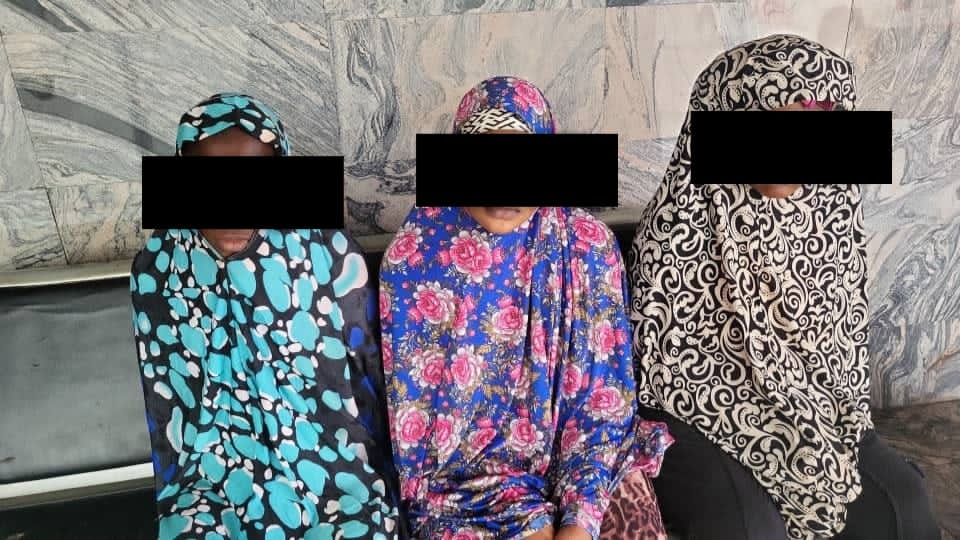
GAHTO Leads Rescue of Three Nigerian Women as Survivors Expose Brutal Sex Trafficking Network Operating Between Nigeria and Mali
…Plateau Government Moves to Rehabilitate Victims, Intensifies Anti-Trafficking Campaign
By Naomi Onome

A major transnational human trafficking syndicate operating across West Africa has suffered a significant setback following the successful rescue and repatriation of three young Nigerian women who were lured to Mali with false promises of employment but were instead forced into prostitution under brutal and inhumane conditions.
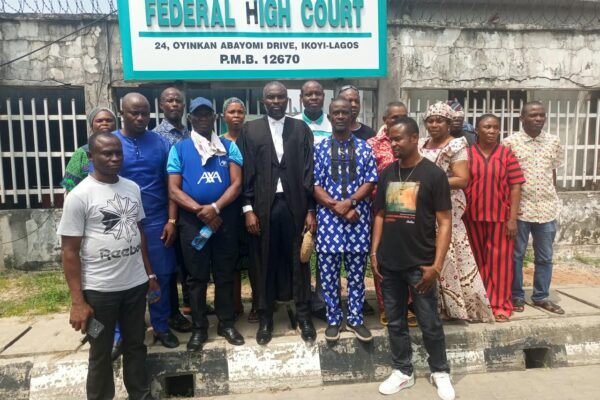
The victims—Joy Daniel, 23, and Janet Davou, 22, both indigenes of Plateau State, alongside Victoria Sunny Alexander, 23, from Delta State—were formally handed over to officials of the Plateau State Government in Lagos after their rescue from Tabakoto, a gold-mining settlement in Mali’s Kayes Region, where they had been held in sexual captivity.
Their rescue followed a coordinated intervention involving the Global Anti Human Trafficking Organization (GAHTO), officials of the Plateau State Government, and anti-human trafficking partners working across national borders.
The survivors, while recounting their ordeal, described months of unimaginable abuse, physical violence, psychological manipulation, starvation, and sexual exploitation at the hands of traffickers who preyed on their desperation for better economic opportunities.
Joy Daniel narrated that her ordeal began while working as a domestic helper in the Ajah area of Lagos, earning a monthly salary of just ₦25,000. Hoping to improve her family’s living conditions, she accepted what appeared to be a genuine overseas employment opportunity.
According to Joy, Janet, a co-survivor introduced her to a man identified as ‘Kingsley’ who lives around the Abule-Egba area of Lagos. Kingsley claimed his sister owned a restaurant in Mali and required workers. Believing the offer was legitimate, Joy and Janet embarked on the journey, unaware they were walking into a sophisticated trafficking network.
Rather than travelling directly, Joy and Janet were secretly moved across multiple international borders under the cover of darkness by the trafficking syndicate. They first arrived at Cotonou in Benin Republic, where their mobile phone SIM cards were deliberately deactivated to cut them off from relatives and prevent any attempt to seek help.
From there, they were transported to Bamako before finally arriving in Tabakoto, a remote gold-mining community close to the Mali-Senegal border.
Upon arrival, the grim reality unfolded. Instead of the promised restaurant jobs, they were handed over to a Nigerian trafficker, popularly referred to as a “madam,” who allegedly coordinated the prostitution network from Nigeria while local accomplices supervised operations in Mali.
Immediately after arriving, the victims had their mobile phones, national identity cards and every personal belonging confiscated. The young women described the accommodation provided by the traffickers as filthy, overcrowded and completely unfit for human habitation.
According to them, as many as 15 young women were crammed into tiny rooms resembling pigsties, surviving on only one meal daily while enduring constant intimidation and severe beatings whenever they resisted engaging in prostitution.
Joy recalled spending days in tears while lying in a dirty room receiving treatment for serious illness. She disclosed that traffickers also subjected them to traditional rituals involving alligator pepper and juju mirrors, compelling them to swear oaths never to escape and to repay an imposed transportation debt of 1.5 million CFA Francs.
The psychological manipulation, she said, was designed to instill fear and ensure absolute obedience. Joy further revealed that she suffered from a chronic pelvic inflammatory disease (PID) before leaving Nigeria, but her health deteriorated rapidly in Mali.
Medical examinations reportedly confirmed that the infection had spread internally, yet the traffickers ignored repeated medical advice and allegedly forced her to continue receiving clients even while she was on intravenous drips and injectable medications.
The survivors also exposed what they described as a serious public health crisis within the trafficking camps. According to them, the traffickers actively encouraged unprotected sexual intercourse by promising that girls who accepted clients without condoms would repay their debts more quickly.
Joy disclosed that many victims contracted infections under the arrangement, causing local patronage to decline as residents became aware of the widespread health risks.
She further alleged that numerous girls trapped within the network were teenagers recruited directly from secondary schools, some barely into adolescence. Many, she said, had remained in captivity for between three and four years without clearing their imposed debts despite years of exploitation.
The turning point came after Joy secretly gained temporary access to a mobile phone. Using WhatsApp, she discreetly contacted her younger sister in Nigeria and transmitted crucial evidence, including photographs of the premises where they were held, their exact location, and the TikTok account belonging to the suspected trafficker.
The information was subsequently forwarded to anti-trafficking advocates, including GAHTO Founder, Prosper Michael, and his associate, Mrs. Jumai, who immediately commenced efforts to trace the victims.
This is another opportunity to own a faster-loading website to expand your business and take it digitally online. Meet the best website designer/master coder for any kind of website. Contact them now it is affordable Chat now: 09077260922
Michael explained that the rescue operation began after he received an emergency request from a strategic partner in Jos. According to him, the partner had earlier been contacted by the Plateau State Commissioner for Gender Affairs regarding two young women believed to be trapped in sexual slavery in Mali.
“Once we obtained their details, we established direct communication with the victims and coordinated efforts that eventually led to their rescue from the traffickers,” he said.
Michael called for stronger regional collaboration among governments, civil society organisations and international agencies to dismantle trafficking networks operating across West Africa. “I want to use this opportunity to call for more collaboration because thousands of our young girls are currently held in sexual captivity across various West African countries,” he said.
He noted that mounting pressure from anti-trafficking organisations eventually forced members of the syndicate to abandon their plans.
Fearing imminent arrest, the traffickers hurriedly purchased return tickets for Joy and Janet and arranged for them to leave Mali before authorities could apprehend them.
Victoria Sunny Alexander recounted a similar experience.
The 23-year-old orphan and single mother of a five-year-old child said she was trafficked from Benin to Mali after being promised decent employment.
Upon discovering she was expected to engage in prostitution, she refused and eventually managed to escape to Cotonou, where she became stranded until rescue networks intervened.
Also speaking during the official handover, the Special Adviser to the Plateau State Governor on Gender Matters and Executive Secretary of the Plateau State Gender and Equal Opportunities Commission, Olivia Dazyam, described human trafficking as one of the gravest social challenges confronting vulnerable young Nigerians.
She attributed the increasing cases largely to poverty, unemployment and the activities of criminal syndicates that exploit desperate job seekers with false promises of employment abroad.
“They tell our local people that they have employment opportunities, but they are merely taking advantage of them. Before we know it, our children are exposed to the horrors of human trafficking, both within Nigeria and in foreign countries,” she said.
Dazyam commended the collaborative efforts of civil society organisations, anti-trafficking advocates and international partners whose interventions ensured the safe return of the victims.
She also praised the Plateau State Government for maintaining a firm commitment to combating trafficking through policy implementation, victim support and public enlightenment.
According to her, the Gender and Equal Opportunities Commission is implementing an extensive prevention strategy anchored on the Child Rights Law and the Violence Against Persons (Prohibition) Act.
She disclosed that awareness campaigns are currently being conducted across all 17 local government areas of Plateau State to educate parents and young people about the dangers of trafficking and irregular migration.
“We are carrying out intensive sensitisation across the state to remind parents of their responsibilities because when children are neglected, they become vulnerable to traffickers who lure them with false promises of better lives,” she stated.
Dazyam assured that the rescued women would receive comprehensive psychosocial counselling, rehabilitation, vocational training and economic empowerment aimed at helping them rebuild independent lives.
Representing the Plateau State Liaison Office in Lagos, Mr. Victor Daya assured that the government would not abandon the victims after their rescue.
He confirmed that arrangements had already been concluded to transport them safely to Jos, where they would undergo rehabilitation and reintegration programmes before being supported to begin productive livelihoods.
Now safely back in Nigeria, the survivors are appealing for economic assistance to enable them rebuild their lives.
Janet Davou warned Nigerian youths against accepting offers of restaurant jobs in foreign countries without proper verification, insisting that many such offers are merely recruitment channels for prostitution syndicates.
Victoria also appealed for support to enable her care for her five-year-old child and establish a legitimate business capable of sustaining her family.

Leave a Reply